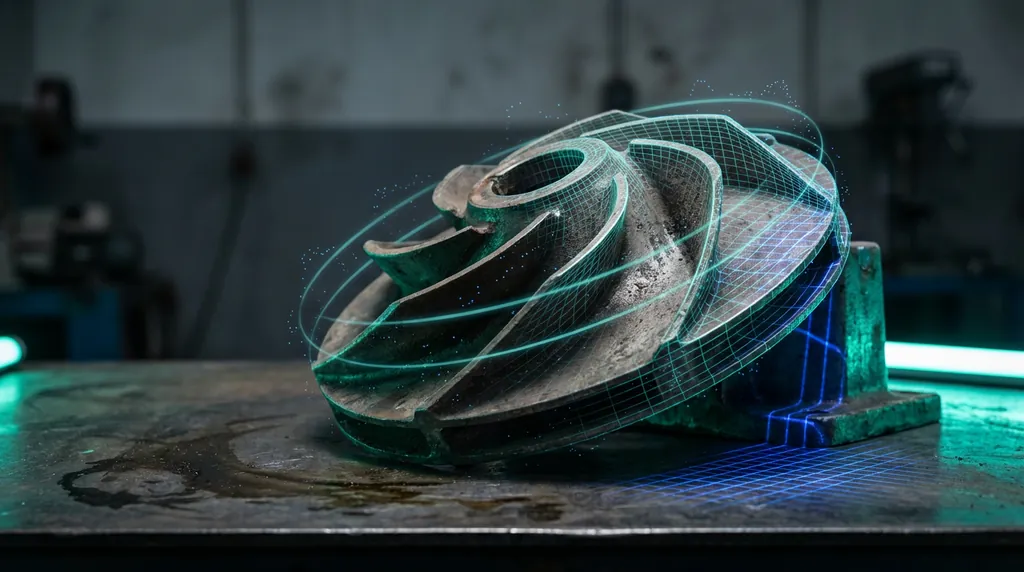

When you look at a helical shaft, your first thought is usually the spiral. On our latest project, however, the real puzzle was choosing a single 'golden' tooth to drive the entire pattern. Every tooth on the scan showed a slightly different wear pattern, so cloning the wrong one would have amplified the error thirty-plus times along the shaft.
§ How We Cracked It
- Deviation Analysis & Average Mesh — inside Geomagic Design X we ran a color map on every tooth face to locate the statistically 'cleanest' profile.
- Lock the master feature — that tooth became our unbreakable reference; everything else was suppressed until it matched.
- LiveTransfer to SOLIDWORKS — with one click, the entire parametric tree landed in CAD, ready for synchronous tweaks. A final tolerance check confirmed a watertight solid — green lights for CAM and simulation.
§ Try This on Your Next Scan
- Reduce mesh noise first — decimation at 0.15 mm closed 70% of spikes without killing detail.
- Save a version with only the master tooth visible; that 'clean seed' becomes a QA baseline months later.
- Always validate the final pattern in context — drop it into the mating housing and run an interference check before you send it to the machine shop.
§ About Mesh2Model
This is the first edition of Mesh2Model — hands-on workflows you can replicate in under an hour, tool breakdowns (Geomagic Design X, SOLIDWORKS, NX, and more), real case studies that shaved days off the reverse-engineering cycle, and bite-sized tips, tricks, and troubleshooting checklists.
Was this helpful?
Take it further
Have a part like this? Or want to learn the workflow yourself?